Median Year-1 federal savings: $43,063 · IQR $38,850–$54,216

Los Angeles, CA cost segregation: what 5 representative properties actually produce

Engine-derived ROI benchmarks for Los Angeles-area short-term rentals, single-family rentals, and small commercial properties. Numbers come from running real fixtures through the Cost Seg Smart engine, same engine that produces your actual study. Studies from $495.

Operated by Cost Seg Smart. Studies are IRS-aligned with engineer review included. 5 fixture benchmarks computed May 2026.

The Los Angeles numbers, distilled

$43,063
Median Year-1 federal savings (100% bonus, 37% bracket)
Interquartile range: $38,850 – $54,216
16.3%
Median reclassification ratio
IQR: 16.0% – 17.7% · Full range: 16.0% – 18.4%
42.7%
Median land allocation
IQR: 42.1% – 44.4%
5
Representative fixtures
Spanning 5 Los Angeles sub-markets

Numbers above are engine-estimated outputs from running 5 representative fixtures, not promises about what your specific property will produce. Results vary based on actual property condition, year built, renovation history, county assessor data quality, and rental treatment (STR vs LTR). Full per-fixture table, neighborhood breakdown, and downloadable CSV/PDF on the Los Angeles cost seg benchmarks page.

Why Los Angeles is different

Los Angeles is the most regulatorily-honest market in our network — and the most misunderstood by out-of-state investors who assume STR-loophole strategies translate from Joshua Tree, Palm Springs, or Tahoe. The City of Los Angeles operates a Home-Sharing Ordinance that restricts most short-term-rental operations to primary residences only, with strict permit and stay-limit requirements. If you're an absentee investor buying an LA property hoping to operate it as an STR with the §469 short-term-rental loophole, the LA municipal code will not support that plan in most cases. There are narrow exemptions, grandfathered properties, and adjacent jurisdictions (West Hollywood, Burbank, Pasadena) with different regimes — but the typical Joshua-Tree-style STR play does not exist in LA proper.

What does exist — and what cost segregation actually serves in LA — is the active fix-and-flip, small-multifamily, and ADU investor market. The bones of cost-seg in LA are: 1920s–1940s bungalow and craftsman SFR stock with heavy post-2010 renovation cost; 2-4 unit pre-war duplex/triplex/fourplex inventory where multiple FF&E packages and shared-system depreciation compound favorably; and the post-2017 ADU boom, where backyard granny-flats add real depreciable basis to existing SFR holdings. The engine works particularly well on the 2-4 unit small MF acquisitions in Mid-City and South LA, where reclassification ratios run 22–28% and absolute dollar deductions on $1M+ acquisitions land in the $40K–$80K Year-1 federal range.

California's §168(k) decoupling is the structural disadvantage, same as for Big Bear, Tahoe California-side, and any LA buyer in California's top 13.3% bracket. The Schedule CA (540) addback recovers the state-side acceleration slowly over the regular MACRS schedule. Model federal-only savings as your Year-1 win and treat the California state side as a long-tail recovery rather than an immediate cash event.

California state tax position: California decouples from federal §168(k). The 100% federal bonus depreciation restored by OBBBA in 2025 produces real federal-tax savings, but California requires the deduction to be added back on Schedule CA (540) and the basis depreciated on the regular MACRS schedule for state purposes. For Los Angeles owners in California's top 13.3% bracket, the headline federal-savings number overstates total tax savings — the state-side California acceleration that would have occurred under federal conformity is recovered slowly over the regular 27.5- or 39-year schedule instead.

Decoupling: California's decoupling is permanent and structural. Federal §168(k) at 100% reduces federal liability; California treats the property under the regular MACRS schedule. For LA cost-seg buyers in the top California bracket, model federal-only savings as your Year-1 win.

Verify with your CPA. State tax conformity rules for federal §168(k) bonus depreciation are adjusted frequently, multiple states have modified their treatment two or more times in the past decade. The general framing on this page reflects our understanding as of May 2026, but you should always verify current-year treatment with a qualified CPA or tax attorney before relying on specific dollar projections for your situation.

Engine outputs: 5 Los Angeles fixtures

These aren't rough estimates. Each fixture was run through the same engine that produces your actual study, RSMeans 2024 base costs, BLS PPI time index, county assessor land allocation, IRS Pub. 946 / Rev. Proc. 87-56 MACRS classification, 100% bonus depreciation per OBBBA.
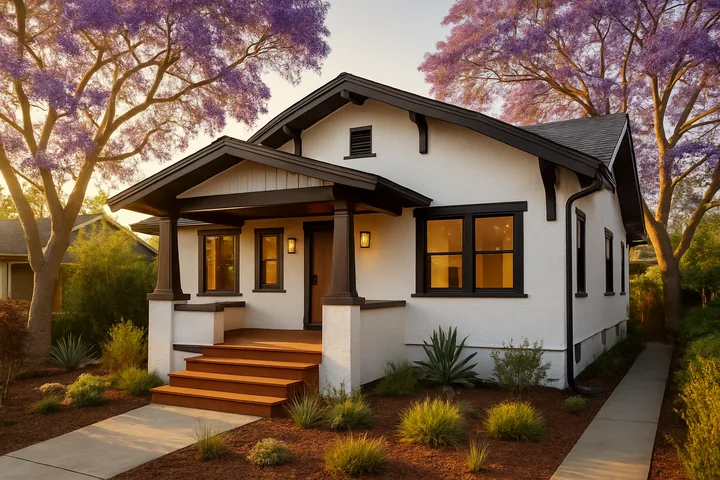
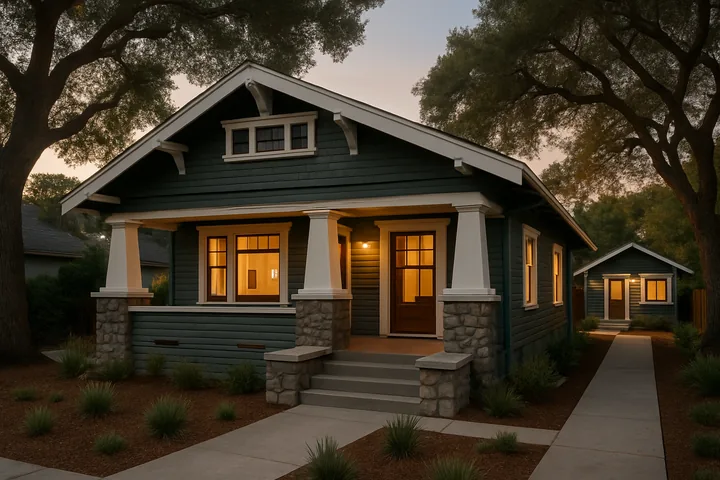
Illustrative Silver Lake Los Angeles renovated bungalow

Silver Lake Bungalow Flip

$43,063
Year-1 federal savings @ 37% bracket, 100% bonus
Purchase price$1,325,000
Depreciable basis$728,750
Land allocation45.0%
5-year reclassified$67,547
15-year reclassified$48,839
Total reclass16.0%
Silver Lake / Echo Park (Eastside) · SFR · Built 1925
Illustrative Highland Park Los Angeles craftsman with ADU

Highland Park Craftsman + ADU

$35,707
Year-1 federal savings @ 37% bracket, 100% bonus
Purchase price$1,050,000
Depreciable basis$601,650
Land allocation42.7%
5-year reclassified$53,016
15-year reclassified$43,489
Total reclass16.0%
Highland Park / Eagle Rock · SFR · Built 1922
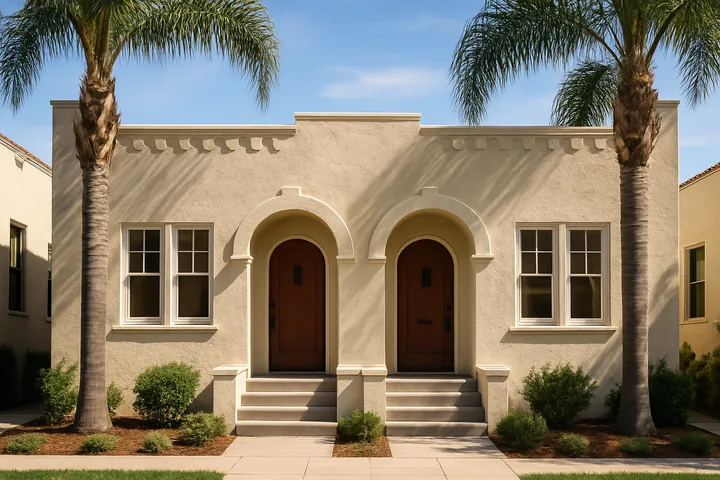
Illustrative Mid-City Los Angeles pre-war duplex

Mid-City Duplex Investor

$54,216
Year-1 federal savings @ 37% bracket, 100% bonus
Purchase price$1,485,000
Depreciable basis$825,808
Land allocation44.4%
5-year reclassified$88,182
15-year reclassified$58,349
Total reclass17.7%
Mid-City / Mid-Wilshire · DUPLEX · Built 1928
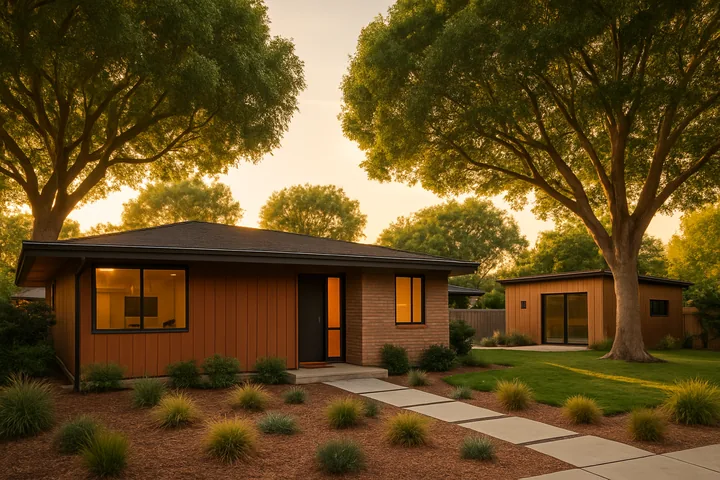
Illustrative Sherman Oaks SFR with detached ADU

Sherman Oaks SFR + Detached ADU

$68,239
Year-1 federal savings @ 37% bracket, 100% bonus
Purchase price$1,850,000
Depreciable basis$1,133,865
Land allocation38.7%
5-year reclassified$104,722
15-year reclassified$79,709
Total reclass16.3%
Sherman Oaks / Valley Glen (San Fernando Valley) · SFR · Built 1968
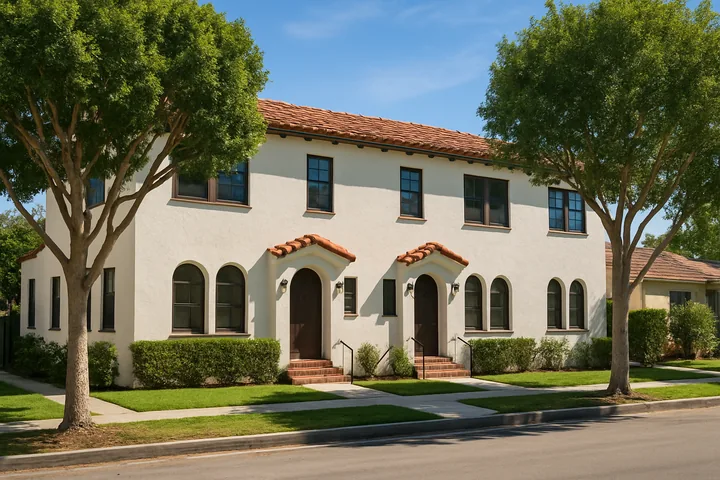
Illustrative South Los Angeles 1940s fourplex

South LA Fourplex

$38,850
Year-1 federal savings @ 37% bracket, 100% bonus
Purchase price$985,000
Depreciable basis$569,921
Land allocation42.1%
5-year reclassified$67,136
15-year reclassified$37,865
Total reclass18.4%
South LA / Leimert Park · FOURPLEX · Built 1947

Deep dive on each example →

Los Angeles neighborhood profiles

Cost-seg ROI varies more by neighborhood than by city. Los Angeles's 5 sub-markets each have their own land-allocation pattern and property archetype:

NeighborhoodTypical valueTypical land allocationProfile note
Silver Lake / Echo Park (Eastside) $1,325,000 ~38% 1920s–1940s SFR and bungalow stock heavily renovated. High land allocation (eastside land scarcity premium). Fix-and-flip dominant; some STR-loophole-eligible properties where owner-occupies primary residence.
Highland Park / Eagle Rock $1,050,000 ~34% Northeast LA — 1920s craftsman bungalow stock with heavy renovation cost-segregation potential. Slightly lower land allocation than Silver Lake. ADU rush since 2017 ADU law. Mix of fix-and-flip and small MF.
Mid-City / Mid-Wilshire $1,450,000 ~32% Pre-war duplex and small MF dominant. The cost-seg study really works here on 2-4 unit acquisitions — multiple units mean multiple FF&E packages and shared-system depreciation. Active small-MF investor market.
Sherman Oaks / Valley Glen (San Fernando Valley) $1,850,000 ~30% 1950s–1970s SFR with substantial post-2010 renovation activity. ADU developments common. Larger lot sizes mean ADU yields are meaningful additions to depreciable basis.
South LA / Leimert Park $685,000 ~24% Lower entry pricing, 1920s bungalow and small MF stock. Strong fix-and-flip activity. Lower land allocation than Westside / Eastside. Cost-seg works particularly well on 2-4 unit acquisitions in this price band.

Methodology note: "Typical land allocation" reflects baseline patterns for the sub-market. For ultra-premium or resort-tier inventory where reconstruction cost exceeds 2.0× the implied depreciable basis after subtracting baseline land, the engine applies a premium land floor (~50%) to keep the study within audit-defensible territory. This means individual fixture engine output may exceed the neighborhood typical, especially for resort-tier ski-in/ski-out, beachfront, or view-premium product where land scarcity dominates value. See the /data/ page for per-fixture land-source attribution. Results vary substantially by specific property condition, renovation history, and assessor records.

Regulatory context

City of Los Angeles Home-Sharing Ordinance: Short-term rentals (stays under 30 days) are generally restricted to a host's primary residence, with annual cap on hosted-stay nights and registration/permit requirements. Non-primary-residence STR operation is largely prohibited in LA city limits. This is the single most important regulatory fact for cost-seg planning in LA — absentee STR strategies do not translate from Joshua Tree, Palm Springs, Tahoe, or other §469-loophole markets. Adjacent jurisdictions with different regimes: West Hollywood (permits available), Burbank (some areas permit), Pasadena (limited permits). Verify jurisdictional boundaries carefully — addresses on the same block can fall under different regulatory regimes. For non-STR investor strategies (fix-and-flip, small MF, ADU), there is no STR ordinance to manage; standard rental property §469 passive-loss rules apply, and real-estate-professional status is the typical path to active treatment for high-volume LA flippers.

For the full IRS-rule reference layer (§168(k), §469 material participation, state conformity), see irsdepreciationrules.com, our open reference site.

Los Angeles cost segregation FAQ

Can I use the §469 short-term-rental loophole on an LA property?

Generally no — at least not in LA city proper. LA's Home-Sharing Ordinance restricts short-term rentals (under 30 days) to primary residences with significant additional constraints. For most absentee investors, the STR-loophole strategy that works in Joshua Tree, Palm Springs, or Tahoe is not legally available in the City of Los Angeles. There are narrow exemptions and grandfathered properties — but the typical Joshua Tree-style STR cost-seg play (LA-resident buys an LA investment property, operates as STR, uses STR-loophole to convert passive losses to active deductions) is not viable in LA proper. Adjacent jurisdictions (West Hollywood, Burbank, Pasadena, Long Beach) have different STR regimes — verify the specific address's jurisdiction before underwriting a §469 STR-loophole strategy.

Does cost segregation make sense for an LA fix-and-flip operator?

It depends on hold period and tax position. Cost seg generates accelerated depreciation deductions in Year 1 — but if you're flipping a property within 6–18 months, depreciation recapture on sale claws back the acceleration. The math only works cleanly for fix-and-flip operators when (a) you're holding the property as a rental between acquisition and sale (rental-then-flip), or (b) you're operating multiple properties simultaneously and can absorb the recapture against other passive-loss positions. For a true short-hold flip, the study cost rarely justifies the deduction acceleration. For a buy-renovate-rent-then-sell-on-1031 strategy with 24+ month holds, cost seg can produce meaningful Year-1 cash relief that funds the next acquisition.

Does cost segregation work for an ADU (accessory dwelling unit) added to an existing LA SFR?

Yes — and the ADU is one of the more cost-seg-friendly LA investment moves. When you build a detached ADU (granny flat) on an existing LA SFR lot, the ADU construction cost adds to your depreciable basis as a new asset. A cost-seg study can identify the 5/7/15-year components of the ADU construction (FF&E if furnished, decking, landscaping, electrical, finishes) separately from the 27.5-year structure. ADU projects in Sherman Oaks, Highland Park, and Mid-City SFRs with 2020–2025 construction dates produce meaningful Year-1 federal deductions — typically $25K–$60K on a $200K–$400K ADU build at the 37% bracket, with the typical 18–28% reclassification ratio for new residential construction. Note: this assumes the ADU is operated as a rental (LTR), not as an STR — STR operation triggers the Home-Sharing Ordinance issue.

Why does the engine produce higher reclassification ratios on LA small-multifamily acquisitions than on SFRs?

Three factors compound on 2-4 unit acquisitions. (1) Multiple FF&E packages: a duplex has two of every kitchen, two of every bath, two of every appliance set — the 5-year personal property pool is doubled. (2) Shared-system depreciation: HVAC, plumbing, electrical, roof, and exterior systems serve multiple units and have different MACRS treatments than a single SFR's systems. (3) Pre-war LA duplex/triplex/fourplex stock (1920s–1940s) typically has substantial post-2000 renovation cost layered onto the original structure — and renovation cost-seg is where the heaviest 5/15-year work happens. Engine reclass for a Mid-City pre-war duplex typically runs 24–30%, vs 18–24% for a single SFR in the same neighborhood.

What does California decoupling actually mean for my LA cost-seg savings?

California decouples from federal §168(k) bonus depreciation. The federal 100% bonus reduces your federal tax liability — but California requires you to add the deduction back on Schedule CA (540) and depreciate the basis on the regular MACRS schedule for California purposes. For an LA owner in California's top 13.3% bracket taking $90,000 of accelerated reclassification, the federal Year-1 savings at 37% is $33,300 in real cash. The California-side $11,970 (13.3% × $90,000) that would have been Year-1 savings under conformity is instead spread across 27.5 years (residential) or 39 years (commercial) at roughly $435/year (residential) or $307/year (commercial) of California savings. You don't lose the California deduction permanently — you lose the acceleration. Model federal-only as your underwriting figure.

More general cost-seg questions answered at costsegsmart.com/faq/.

Ready to run your Los Angeles study?

Cost Seg Smart studies are IRS-aligned, engineering-reviewed, and include written audit defense. Pricing is transparent and starts at $495 for residential properties under $300K, full pricing on the main site.